Ingredients:
-2 cups shredded green papaya
-2 tsp: sugar, fish sauce
-salted baby crabs (as much or as little as you prefer)
-tomato and cucumber slices
-1 tbs dried shrimp
-Thai chilies (optional)
-Thai basil
-juice from ½ lime
-3 string beans

What to Do:
Slice string beans thinly and chop basil. In a large bowl pound dried shrimp, chilies, and sugar using a pestle. Add fish sauce and lime juice and mix to make “dressing”. Add papaya. Using both hands, one with a pestle and the other with a spoon gently pound and mix papaya with the dressing. Lastly, toss in crabs, beans and basil. Serve with tomatoes and cucumber slices.
Ingredients:
-1/2lb ground pork
-1/2 large onion
-1/2 tsp each: salt, pepper
-pinch of sugar
-4-5 large cabbage leaves
-4 scallions

What to Do:
Dice onion and mix with pork, salt, pepper and sugar. Cut cabbage leaves in half and remove stems. Cut the scallions in half lengthwise. Boil a pot of water and give the cabbage and scallions a quick dip, remove and drain. Fill each cabbage leaf with pork filling, wrap and tie with a piece of scallion. Simmer cabbage rolls in broth for approx ½ hour before serving, add salt to taste.

The tricky part about making this desert is figuring out the right ratio of yeast to rice. Too much or too little yeast can result in mold growing on the rice. The bottom line is you’re making wine, thus everything should be clean, dry, and accurately measured.

If Using Hong Kong Yeast:
-1 wine yeast ball (approx. 8g, about the diameter of a US quarter)
-1kg white or brown glutinous rice

If Using Vietnamese Yeast:
-1/2kg white or brown glutinous rice
-2 wine yeast balls (approx 5g, diameter about the size a US dime) or 5 small yeast balls (approx. 7g, diameter about 3/4 of a US dime)

What to Do:
Wash rice a few times; soak for a few hours (the longer you soak, the faster the rice will cook). If using brown glutinous rice than soak and cook as you would normal rice (in a pot with water). If using white glutinous rice, cook the rice by steaming. The rice should be tender and moist. Grind yeast into a powder. Spread cooked rice on a large tray and cool until warm. Sprinkle yeast over rice and mix. Wet hands with saltwater solution and form rice into small balls (this step is optional). Place rice balls in a clean and dry container, cover tightly and place in a warm place for rice to ferment.

How long it takes for the wine to mature depends on the temperature at which it ferments. The process usually takes a few days. After a few days there should be plenty of wine in the container…enough for the rice balls to float in. The longer you ferment the stronger the wine will be. Serve “young wine” as a dessert. “Over-fermented” wine could be used to make Bánh Bò in place of the yeast or, the wine could be filtered, boiled and use as a drinking wine or, to soak spices to make cooking wine.

Saltwater Solution for Shaping Rice Balls:
-1 cup warm water
-1/2 tsp salt

*Dissolve salt in water, the solution should have the saltiness of soup.
Ingredients:
-1/2lb beef
-1 large bittermelon about 1lb
-3 cloves garlic
-1/3 tsp salted preserved beans (tau xi)
-1 tsp oyster sauce
-1/2 tsp tapioca or corn starch
-3 tbs water
-1 tsp oil
-salt and sugar to taste

What to Do:
Slice beef thinly. Mince garlic and beans. Mix together oyster sauce, water and starch. Cut bittermelons in half length wise and remove seeds, then cut into thin strips. Heat oil in a wok, fry garlic and beans until fragrant add beef and bittermelon. Stir-fry over high heat until beef is cooked; add starch mixture and mix well until thicken.


Ingredients:
-100g butter
-100g sugar
-200g flour
-1 tsp vanilla
-1 egg (50g)
-1 tsp baking powder
-1/3 tsp baking soda
-food coloring
-maraschino cherries

What to Do:
Drain and dice cherries. Cream butter and sugar, add egg and vanilla. Mix in flour, baking powder, and baking soda. Add coloring (yellowing if making plum blossoms and pink if making cherry blossoms). Fill a cookie gun with dough and press cookies directly onto a baking sheet, add a cherry in the center. Bake at 400’F for 5 mins, reduce heat to 350’F and bake for another 5 mins.

Note:
If you do not own a cookie gun, use a pastry bag fitted with a drop flower tip.

I have come across numerous English translations for this cookie anything from button cookies, to coconut cookies. However, the literal translation of this cookie would Cookie Yeast. It is named so because the cookies look like yeast balls. This cookie is made with tapioca flour which explains why it is so hard to get the recipe right. Anyone who has worked with tapioca flour knows it is very hard to get it to hold its shape. The other hard part is to achieve the distinctive characteristics of this cookie which is mildly sweet with a hint of coconut flavor while at the same time have a light, crunchy yet melt in your mouth texture. These cookies could be bought dirt cheap at almost all Asian grocery stores….so why go through all trouble making them? Because it’s fun to play with your food. :D Furthermore, cooking and baking is an art not a matter of economics. And…because I’m crazy like that.

Ingredients:
-400g tapioca starch/flour
-75g rice flour
-150g sugar
-150g coconut milk/cream
-1 ½ tsp double acting baking powder
-food coloring and flavoring (optional)

What to Do:
Mix together 200g tapioca starch, rice flour, sugar, baking powder, add coconut milk and mix until smooth. Add food coloring and flavoring desired. Prove for ½ hour. After ½ hour add the remaining tapioca starch slowly and knead until dough is smooth, flexible and does not stick to your hands (don’t have to add all of the remaining 200g tapioca starch just enough to create a dough). Prove for ½ hour more. After the second proving add in the remaining tapioca starch to make a dry and crumbly yet moist dough. The dough should be crumbly but holds together when you shape it. Shape dough into small balls and bake at 275’F for about 20 mins. Let the cookies cool completely on the baking sheet before removing.

Note:
If dough is too moist the cookies will melt when you bake them, too dry and the cookies will come out rock hard, baking at high temperature will result in burnt cookies.


Texture of dough at 3rd stage, right before shaping the cookies.

This is a French dessert that made its way into Vietnamese Cuisine via the French colonization of Vietnam. Traditionally, Flan is usually baked in a water bath. However, ovens are rare in Vietnam and hard to operate (only serious or professional bakers own and know how to properly operate an oven). This is one of the reasons why Vietnamese cakes and pasties are usually steam, or boiled…very rarely baked. The steaming method is much faster than baking but harder to master. Heat from steam is nothing like heat from an oven. Therefore the “method” has to be slightly adjusted in order to render a desirable flan.

Caramel Sauce:
For every 3 tbs of sugar, add 1 tsp water. Boil the two together until golden carefully pour hot caramel into a “mould”. The caramel should harden when it cools.

Flan:
-6 eggs
-500g fresh milk or cream
-150g sugar
-1 tsp vanilla extract

What to Do:
Stir together eggs, sugar, milk and vanilla. Strain the mixture a few times. Pour mixture into prepared mould. Steam over high heat for 5 mins, lift steamer lid to release excess steam and steam for another 5 mins. Turn off the heat and let the flan cool in the steamer to room temperature.

Note:
Avoid agitating the eggs as much as possible. Less agitation means a smoother texture flan. The steaming time varies depending on the size of mould used. The main idea is to steam the flan ½ - ¾ cooked and let carryover heat do the rest of the work. Over steaming will negatively affect the texture.

Variations:
*Orange Flan: Add finely grated orange zest
**Coconut Flan: Use coconut milk in place of milk (or ½ coconut milk, ½ milk)
***Coffee Flan: Replace part of the milk with coffee (amount depends on your taste)
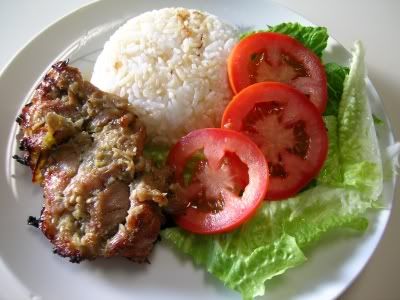
Recipe here, serve with rice and a healthy helping of fresh lettuce and tomatoes.

This is a French pastry that made its way into Vietnamese Cuisine via the French colonization of Vietnam. Known as Choux à la Crème, the Vietnamese translate it to Bánh Sữa or Bánh Sữa Nhân Kem (which means milk pastry/cake). Other names for this pastry include Bánh Xu or Bánh Su. “Xu or Su” is spelled from the Vietnamese pronunciation of the French word “Choux”. In the US they’re known as cream puffs. However, American cream puffs are usually filled with fresh whipped cream while the Vietnamese version is only filled with pastry cream. Vietnamese spin-offs have resulted in fillings of durian, coconut, or coffee pastry cream.

Pâte à Choux (Pastry):
-240g water
-125g flour
-5 eggs (250g)
-50g butter
-1 tsp sugar
-1/2 tsp salt if using unsalted butter

*Boil water, sugar, salt, and butter together. Add flour and stir dough over medium heat for about 5 mins or until not sticky when pinched. Cool for 5 mins and beat in eggs one at a time. Fit a star tip in a pastry bag and fill with dough/batter. Pipe round pastries on a baking sheet and bake at 350’f for about 20 mins or until golden. Cool pastries completely before filling.

Crème Pâtissière (Pastry Cream Filling):
-5 egg yolks
-500g fresh milk or cream
-125g sugar
-1 tbs custard powder (optional)
-1 tsp vanilla extract
-2 tbs corn starch (1 tbs if using custard powder)
-50g butter

*Beat together egg yolks, starch, and custard powder with sugar. Meanwhile boil the milk and slowly add ½ of the heated milk to the egg mixture while mixing constantly to keep the eggs from curdling. Add egg mixture into the pot with the rest of the milk and constantly stir over medium heat until thickened. Add butter and mix until melted. Cool cream before filling. If the cream looks a little thin…don’t worry it will thicken when it cools.

Variations:
*Coconut Pastry Cream: Replace milk with coconut milk/cream.
**Durian Pastry Cream: Replace sugar with durian flesh and add sugar to taste (if needed, durian alone should be sweet enough).
***Coffee Pastry Cream: Replace ½ or all of milk with coffee (depends on how strong you want the coffee taste to be.

What to Do:
Once pasties are cooled, use a knife or scissors to cut a small slit on the side of each puff. Fill with cooled pastry cream.

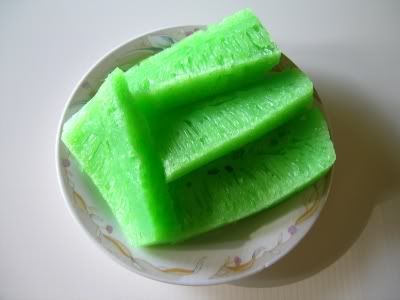
Recipe here, replace 1 cup water (when making syrup, step B) with pandan juice. Have Fun!